Growing Old With Rock and Roll

Growing Old With Rock and Roll

Saturday, February 25, 2017

The Mahavishnu Orchestra - Birds of Fire (1973)

http://www.soundstagedirect.com/media/birds_of_fire.jpg


The last studio album from The Mahavishnu Orchestra’s original lineup, Birds of Fire, consolidates and refines the approach illustrated on the band’s debut The Inner Mounting Flame. Such moves can neuter a band’s impact if the needle swings too far towards tidiness or pretension. It is not the case with Birds of Fire. This ten song effort ranks among the iconic fusion releases from the genre’s heyday and stands forty plus years later as one of the period’s truly substantive musical achievements. Releases like this proved the right elements from guitar-dominated rock music capable of mixing with genuine improvisation and challenging musical approaches with one informing the other. This is music written, recorded, and performed by adults for adults.

The title song opens with Billy Cobham’s percussion crashes and guitarist John McLaughlin enters soon after. It is one of The Mahavishnu Orchestra’s notable attributes to work so effectively as a cohesive musical unit rather than five master musicians pulling against one another for their share of the spotlight. Few tracks illustrate it better than “Birds of Fire”. McLaughlin’s guitar work is often highly structured, but he’s just as adept careening off into exploratory passages where incendiary, freewheeling tendencies take over. Cobham, violinist Jerry Goodman, and keyboardist Jan Hammer key their contributions off McLaughlin, but the flair with which they do so imbues the performance with added layers. “Miles Beyond (Miles Davis” is a tribute to McLaughlin’s friend and one time bandleader. The guitarist and Hammer make for an exceptional pairing, in general, but this track finds one musician strengthening through contrast the contributions of the other.

McLaughlin and Goodman trade off some flamethrower-like volleys on “Celestial Terrestrial Commuters” with Hammer contributing some fire-breathing keyboard lines of his own. It’s a relatively brief cut and followed by an even shorter electronic freak out titled “Sapphire Bullets of Pure Love”. The piece serves no purpose clocking at less than thirty seconds long. “Thousand Island Park” shows off the band’s diversity with an exquisitely lyrical turn built around piano and acoustic guitar. It’s a sparkling McLaughlin showcase with memorable melodic value. The unusual amount of repetition defining the song “Hope” makes it stand out from more adventurous surrounding pieces, but dynamic playing and a manageable length keeps the performance on point. “One Mind” burns at a white-hot simmer with some key crescendos along the way before shifting gears near its mid-way point into a stripped-down variation on the initial theme. This overall performance rates among Billy Cobham’s brightest moments on the album, but his work in tandem with bassist Rick Laird is equally impressive. McLaughlin, Hammer, and Goodman duel again on this track with even more explosive results than the earlier “Celestial Terrestrial Commuters”. They delve into muted, subtler territory again for the song “Sanctuary” and there’s an ominous tone struck by its often unpredictable swells and methodically paced development.

The relaxed, glittering beauty of “Open Country Joy” ends just short of the four minute mark. Jerry Goodman makes his presence especially felt on this performance thanks to his elegant grace with the violin skirting between neo-classical lyricism and surprising touches not far removed from you find on classic country albums. The complementary touches from McLaughlin and Hammer are ideal. “Resolution” closes Birds of Fire with a mounting, appropriately climatic number whose success is largely dependent on Laird and Cobham’s sure hands. Closing on this note isn’t the ending this legendary lineup imagined for themselves and, in hindsight, the song title is bittersweet. There is no sense of an exhausted band on Birds of Fire. Greater heights awaited this collection of musicians, but it wasn’t to be.

Grade: A

Spirit Caravan - Dreamwheel (1999)

https://images-na.ssl-images-amazon.com/images/I/51odv-H4IzL._SS500.jpg

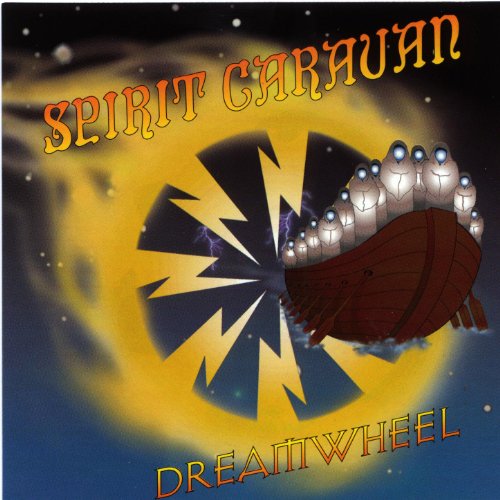
Nestled between the band’s two seminal full-length releases, Jug Fulla Sun and Elusive Truth, the five song EP Dreamwheel is an often neglected piece of the Spirit Caravan discography. Scott “Wino” Weinrich on vocals/guitars, Dave Sherman on bass, and Gary Isom on drums comprised one of the most formidable power trios of the last quarter century and this brief release finds them at or near their peak.

The title cut stands out above the rest and remained a mainstay of the band’s live set on following tours. Isom’s drumming gives it massive swing matching up nicely against Wino’s warm guitar tone and chunky riffing. “Dreamwheel” has memorable lyrics with strong sci-fi/fantasy connotations and Wino’s varied phrasing, sometimes understated while rousing at other key points, gives the words added dramatic value. The EP’s second song “Burnin’ In” has a more methodical pace than the opener with lyrics rooted in historical cruelties instead of fanciful fictions. Sherman and Isom’s rhythm section locks in tight with Wino’s steady, subterranean riffing and the latter’s commanding voice overcomes less than seamless vocal phrasing. “Re-alignment/Higher Power” is a brief, but strong instrumental and conjures a surprising amount of atmosphere in a condensed space.

The mammoth, overdriven riffing propelling “Sun Stoned” gains added heft from the fat rhythm section attack. Isom, in particular, is on point and his ability to accentuate Wino’s guitar work remains one of this lineup’s greatest strengths. The lyrics mix fantasy-type imagery with suggestions of a love song creeping through the symbols and Wino’s vocal dovetails nicely into the arrangement. “C, Yourself”, the EP’s finale, plods with dogged riffs punctuated with quick flourishes and fills. The tempo picks up some in the song’s second half and Wino’s fiery lead guitar hits its mark. It’s a quasi-character study lyrically and Wino belts out the words with perfect curtain closing passion. Dreamwheel isn’t long, but Spirit Caravan packed a ton of musical firepower into this EP and it still stands as a small incandescent gem in the band’s history.

Grade: A-

Friday, February 24, 2017

Bob Dylan - Under the Red Sky (1990)

http://www.resident-music.com/image/cache/data/Emilys_Packshots/29.11.11/BobDylan_UnderTheRedSky-500x500.jpg

1990 seemed to herald a new, clearer dawn for Bob Dylan after nearly a decade in an artistic wilderness. Working with producer Daniel Lanois on 1989’s Oh Mercy delivered Dylan his best notices in years and his collaboration with The Traveling Wilburys garnered him renewed mainstream attention. The follow-up to Oh Mercy, 1990’s Under the Red Sky, short circuited his new found momentum.

Things do not begin auspiciously. “Wiggle Wiggle” is, arguably, the nadir of Bob Dylan’s songwriting career and the problems are manifold. Producers Don and David Was recruited a bevy of guest stars to widen the drawing power of Dylan’s newest release, but there’s little rhyme or reason to their selections. Guns ‘n’ Roses guitarist Slash appears on this track, but his neutered presence means he might as well played accordion on the song. The lyrics are absurd and Dylan’s delivery never rises above more than a slurry mumble. The title track is one of the album’s few lasting achievements. George Harrison contributes some evocative slide guitar and the style Dylan adopts for the lyric, quasi-cribbing from the fairy tale tradition, helps invest its subject matter with an added poetic veneer. It’s a clean, uncluttered production job here as elsewhere on Under the Red Sky and it provides a perfect frame for the track. “Unbelievable” attempts aping the romping blues blast of Dylan’s seminal Bringing It All Back Home and Highway 61 Revisited period but, despite a smattering of interesting lines, sounds like a pale imitation. Dylan musters up a mild amount of vocal enthusiasm, but it’s far from enough to elevate the song past middling
.
It isn’t enough. The album’s sole love song, “Born in Time”, originally hails from the Oh Mercy sessions and is a hit and miss affair. There are some well turned couplets and phrases scattered through the song and a sympathetic band performance, but the song’s point of view never settles and ultimately makes too diffuse of an impact to really stick with listeners. There’s some more flirting with the past on “T.V. Talking Song”. The song is cut in the mold of “talking blues” from early in Dylan’s career, but lacks much of the same charm. Much of the problem, lyrically at least, lies with the increasingly dour world view weighing down his words. The same man who, during this period, took to recording and appearing in public with a hood pulled over his head so people couldn’t take his picture (when asked about it during this timeframe, Dylan referred to the American Indian belief that cameras make ghosts of people) uses the song’s “storyline” as a thin cover to rail against the evils of television. There’s very little art here, just polemic, and its one grace note of humor comes when Dylan refers to Elvis shooting his TV. It isn’t enough.

“10,000 Men” is a throwaway. This is the sort of track that, on stronger albums of yore, wouldn’t have made the final cut and once again leans heavily on a “cataloging” lyric style to get over. It doesn’t work. “2x2” relies on the same approach, but there’s much more substance here and he’s joined by some additional star power, namely David Crosby singing backing vocals. The song has some nice lyrical turns and the subject matter can be interpreted a variety of valid ways. “God Knows” is another leftover from the Oh Mercy sessions that has remained a recurrent feature in Dylan’s set list over the years. Cataloging, again, but it’s effective here thanks to the obvious effort he’s invested in making it work and one of the album’s few truly inspired vocals. Another of those inspired vocals comes with the album’s penultimate track “Handy Dandy”. There’s a little self-referential winking going on with guest organist Al Kooper’s echoing of his legendary riffing in “Like a Rolling Stone”, but the wordplay is dazzling and Dylan proves he is equal to the task. The final track, “Cat’s in the Well”, conjures up some more of the album’s recurring nursery rhyme language, but there are also some of Dylan’s apocalyptic conceits working their way into the track. It ends a relatively mediocre album with an emphatic exclamation point. Under the Red Sky sputters too much, but there’s some memorable moments preventing it from being completely disposable.

Grade: C+

Thursday, February 23, 2017

Black Sabbath - Paranoid (1970)

http://www.prog-sphere.com/wp-content/uploads/2012/05/Black-Sabbath-Paranoid.jpg

Sunlight soaked the room red when I heard Black Sabbath for the first time. The one window in my bedroom at ten years old faced west and lined up well with the rising and falling sun. The sun, twice each day, blasted through the floor-length thick crimson curtains covering the window and flooded the room with a red glow. The Castle Communications collection Black Sabbath’s Greatest Hits drew me in thanks to its slightly garish reproduction of Hieronymus Bosch’s The Garden of Earthly Delights and began with “Sabbath Bloody Sabbath” on side one. Tony Iommi’s guitar sound, Ozzy Osbourne’s bluesy wail, and the inspired rhythm section attack from bassist Geezer Butler and drummer Bill Ward gripped my imagination from the first. Iommi’s guttural guitar during the “chorus” for “Sabbath Bloody Sabbath” probably first kicked open the door of my musical imagination and it is sheer happenstance I ever saw that cassette sleeve cover long ago.

Happenstance played no part in having my first copy of Paranoid. The eight songs on Black Sabbath’s 1970 sophomore release became the cornerstone of the band’s live shows and it’s easy to hear why. The key tracks, “War Pigs”, “Iron Man” and “Paranoid” are augmented by second tier cuts that, from any other band of the era, deserved consideration as their best work. “Electric Funeral”, “Fairies Wear Boots”, and “Electric Funeral” have all received live airings over the intervening years with great success. The remaining tracks are an instrumental and the inventive, but certainly not hard rock, “Planet Caravan”. There are few truly perfect albums in the rock canon; most contain at least one near or outright miss. Not so with this release. The transition from the first to second album sees a band streamlining their focus, gathering confidence, and building on the debut with a seminal release defining their careers thereafter.

“War Pigs” is a blistering tour de force. Iommi, Butler, and Ward bring the world crashing down on listener’s heads and spare no punches depicting a fallen world slipping into a final darkness. The contrast between the varying guitar passages became a Sabbath staple, but Iommi’s darkly lyrical soloing near the song’s end puts the final exclamation point on the track. “Paranoid” remained the band’s go to closer or encore through multiple incarnations and intervening decades haven’t withered its minimalist, bare fisted power. The lead break and Osbourne’s unhinged, agonized vocal are burned into my brain until I die. “Planet Caravan” is singular in the band’s catalog. This dreamy, lightly psychedelized tracks plays like its wreathed in a marijuana cloud and Ozzy affects a much different voice than normal for the vocal. Musical touches like Iommi’s flute and Bill Ward playing congas creates still carry a certain jolt of surprise, but the band’s original lineup took a lot more musical risks in their heyday than later lineups. The sternum rattling beat kicking off “Iron Man” sets the stage for an iconic Iommi riff. The band’s lyrics never before tackled the assortment of sci-fi tropes comprising “Iron Man”, but the narrative qualities and bell clear themes of alienation solidify the song’s strengths in such a way it’s no stretch to know why this is such an anthem.

“Electric Funeral” is rock music’s Götterdämmerung. Sabbath, for almost five minutes, invokes the reality of nuclear holocaust over a snarling wah-wah soaked Iommi riff. They take the tempo at a slow crawl further drawing out a listener’s dread before the intensity peaks in a hard charging quasi-shuffle near the song’s end. “Hand of Doom” is initially built around Butler’s ominous bass riff and Iommi’s crashing guitar riffs. The lyrics reflect the band’s penchant for writing about their times; references to Vietnam, drug abuse, and Ozzy’s Jeremiah-on-the-mount denunciation of purposefully wasted lives. The steady, swinging build of the instrumental “Rat Salad” acts as an extended introduction for the grinding start-stop churn of “Fairies Wear Boots”. Iommi fires off one furious riff after another while Butler and Ward lay down some hard swagger doubling the guitarist’s lines. It’s a full on gut punch to end one of rock music’s most influential works.

Grade: A+

Wednesday, February 22, 2017

Asia - Silent Nation (2004)

http://ecx.images-amazon.com/images/I/51j5v+U-fKL.jpg

Asia’s run with bassist and songwriter John Payne handling lead vocals is destined to end up a footnote in the band’s long history. The long shadow cast by the debut forever cemented John Wetton as the voice and face out front for Asia, so accepting Payne as his replacement remained a daunting task over four studio albums. Judged on their merits, Payne objectively stacks up well, but comes up short on key points. He grew into the role over time and certainly showed development however. His final studio album co-written with Geoff Downes before the 2006 reunion of the original lineup, Silent Nation, is arguably his most complete performance as the band’s front man and an inspired outing with their commercial prospects at, arguably, their lowest ebb.

There are immediate questions. “What About Love?” is the sort of arch traditionalist Asia inviting criticism. On one hand, however, there’s much worth admiring. The track’s musical elements are well balanced against each other and the band’s signature harmonies are immaculately arranged. There’s an interesting moment late in the song when the band falls away and cedes the spotlight to Geoff Downes’ organ playing. The song’s foundation, however, is moldy and rotting. The rhythm section throbs along with the same straight line tempo we’ve seemingly heard in many Asia songs. “Long Way from Home” has a little more bounce and there’s added emotional complexity here lacking in the opener. Payne’s voice is full of melancholy tempered by optimism. The tempo varies some in the middle eighth, but it doesn’t add a lot overall. The performance is tastefully done despite the band’s reputation for laying things on too thick.

Goodness always abounds when Geoff Downes plays Hammond organ. “Midnight” has a lot of instrumental goodness, but the lyric isn’t particularly substantive compared to its musical values. It’s one of the album’s extended pieces, edging far outside the purview of the typical Asia track, but it pays off musically. “Blue Moon Monday” slows things down and amps up the theatrical values, but there are a number of nicely handled transitions and the songwriting manifests a variety of moods. Songs like this and “Midnight” are Silent Nation’s clearest signals Asia are stretching a little more hoping to make more of an impact. Payne’s vocals are particularly emotive here. The title song is another example of the band showing far more taste and restraint than they are typically credited for and it’s another of the album’s extended tracks, clocking in a hair over six minutes, finding the band making a concerted effort to reconnect with a strong sense of musical virtuosity. The track “Ghost in the Mirror” is pure Asia pop 101 and such songs, typically, succeed on the strength of their chorus. Judged on that basis, this is one of the album’s more successful songs in such a vein.

“Gone Too Far” finds life as a delicate duet between Payne’s vocals and the light touch of Downes’ keyboards. It’s only half the song’s half way point when the full band enters and Guthrie Govan nails a brief, but impressive, guitar solo. The unexpected vocal chorus introduced near the song’s end seems tacked on, but others might hear it as perfectly in keeping with the song. “I Will Be There for You” is a sleek and breezy AOR rock tune with an urgent pulse and sweeping pace. Asia isn’t stretching with this track, but it plays to their obvious strengths. “Darkness Day” has strong atmospheric qualities, but there’s a feeling of straining for effect. The performance benefits from Downes’ superb sense of orchestral structure, but there’s nothing truly compelling to hold listener’s interest. Silent Nation concludes with “The Prophet”. Few songs are more illustrative of the difference between the Wetton and Payne eras of the band’s history. Hearing John Wetton lend his voice to a song like this is scarcely conceivable. It does, however, make for an impressively dramatic finale even if its ultimate effects don’t linger long. The final studio release from this period in Asia’s history has its moments, but rates as solid rather than spectacular in the end.

Grade: B

Asia - Alpha (1983)

http://www.progarchives.com/progressive_rock_discography_covers/813/cover_3713191182009.jpg

It shouldn’t have come so soon. 1984 seems like an ideal time for Asia, the much ballyhooed supergroup, to return with a well considered and focused follow up to their smash self-titled debut. The band’s songwriting trust, bassist/vocalist John Wetton and keyboardist Geoff Downes, born the brunt of the band’s commercial fortunes on their collective backs while guitarist Steve Howe parried for whatever credits he could get. This situation only became more fraught after the Wetton/Downes songwriting team scored big with “Heat of the Moment” and numerous other singles off the first album. The resulting fallout from the first album’s staggering success saw the band bowing to record company pressure and re-entering the studio before they had time to artistically recuperate. The second album, Alpha, bears all the marks of its workmanlike labor, but there are moments pointing the way to what an organically developed sophomore effort might have sounded like

It begins with two enormous power ballads. “Don’t Cry”, the album’s first single, and “The Smile Has Left Your Eyes” became instant mainstays in the band’s set thereafter and it’s easy to hear why. These are the quasi-orchestrated, cinematic pop songs tapped into the heart of Asia’s songwriting aesthetic. The Beach Boys’ influence on Wetton is often apparent throughout the band’s discography and few songs better illustrate their hold than the track “Never in a Million Years”. The expansive multi-tracked harmonies seamlessly threaded into the song highlights another superbly orchestrated arrangement, but the chorus shows cracks and doesn’t come off quite as rousing as it should.

There’s material on Alpha with potential not properly exploited. “My Own Time (I’ll Do What I Want)” contains some memorable Steve Howe guitar and his interplay with Carl Palmer is particularly strong, but the track lacks the urgency of its sentiments and comes off a little too limp. Another track from Alpha earning a longstanding place in the band’s live show is “The Heat Is On” and it’s easy to hear why. It’s the album’s best outright rocker and keeps things brisk and focused. Downes and Howe shine on their respective instruments, but the musical highlight comes with their organ/guitar exchange in the song’s second half.

The album’s second half opens with another uptempo number. Carl Palmer expertly handles “Eye to Eye” with a minimum of fuss and Downes’ keyboards have a rambunctious bite, but there’s no ultimate payoff for the track. “The Last To Know” has some virtues, but there isn’t enough to hang your attention on melodically and it ends up sounding more full of bluster than genuine dramatic value. “True Colors” has some laudable sentiments but, musically, lacks enough melody to make it top flight Asia material and the chorus sounds a bit bolted on. The band first premiered “Midnight Sun” during their initial tour, but those early performances far outstrip the comparatively leaden studio counterpart. Alpha concludes with “Open Your Eyes”, the lengthiest cut by far, and the album’s sole concession, but it’s overlong for its musical aims and plays like a very calculated, self-conscious closer.

Grade: B

Nazareth - The Catch (1984)

https://upload.wikimedia.org/wikipedia/en/thumb/a/a0/The_Catch_Nazareth.jpg/220px-The_Catch_Nazareth.jpg

The eighties began well for Scottish rockers Nazareth, but soon turned unkind. Their first release of the new decade, Malice in Wonderland, still represents the last time they exerted any significant commercial impact in the American music market, but MTV’s dawning power and accelerating tides of changing fashions swept away their influence with each succeeding year. Fortunes in freefall accompanied the release of 1984’s The Catch and this album represents one of the band’s best attempts at staunching their bleeding. There are some unlikely successes on the album, some notable misfires, and an overall sense of a band groping for direction in an increasingly alien musical landscape.

The album opener, “Party Down”, is far removed from the band’s original sound. The dense keyboard/synthesizer mix doesn’t neglect melody and there’s an acoustic rhythm guitar giving the song a solid musical underpinning. Even if the initial effect of hearing him in this setting is incongruous, front man Dan McCafferty proves himself quite capable of flourishing in this then-modern context and his emotive phrasing gives a distinctly human feel to an otherwise largely electronic track. One of the songs earmarked as a single, “Ruby Tuesday” finds the band attempting to repeat the success they earned for their legendary covers of “Love Hurts” and Joni Mitchell’s “This Flight Tonight” with their own unique take on a Rolling Stones classic, but the choice doesn’t play to their strengths. It’s a solid arrangement and performance; guitarist Manny Charlton and drummer Darrell Sweet, in particular, distinguish themselves. McCafferty, however, sounds a little bit out of place with the lyric and doesn’t strike the note of delicacy demanded by this Jagger/Richards composition.

“Last Exit Brooklyn”, a perhaps unintended play on the title of Hubert Selby’s novel Last Exit to Brooklyn, is another illustration of a band attempting to approach their traditional strengths from a different angle than before. The restless bass line and bustling overall sound of the rhythm section is the song’s primary building block, but Charlton’s guitar weaves in and out of the mix with a variety of tasty fills. “This Month’s Messiah” is the album’s best rock track and remains a recurrent staple of the band’s set list to this day. It’s one of the album’s best lyrics from a band whose talents in that area remain frequently underestimated and McCafferty belts out with every ounce of the drama demanded by the song.

“Sweetheart Tree” is an underrated gem and bluesy throwback on a release largely controlled by commercial considerations. The entire band excels here for obvious reasons and the song’s ambitions don’t aim high, but it’s loose and inspired. It’s a late reminder how the premier rock bands of the 1970’s lost their way in a rapidly changing eighties world. Evolution is not a bad thing; all bands must if they want to survive. The Catch proves how imposing arbitrary evolution never changes a band’s fortunes.


Grade: C+