Growing Old With Rock and Roll

Growing Old With Rock and Roll
Showing posts with label asia. Show all posts

Monday, March 13, 2017

Asia - XXX (2012)

http://cps-static.rovicorp.com/3/JPG_500/MI0003/386/MI0003386483.jpg?partner=allrovi.com

This is Asia’s finest moment since their debut. The 2012 release XXX stands as the fullest realization of the much ballyhooed super group’s potential for two crucial reasons. The nine song collection contains every particle of the musical energy powering their debut, but it’s likewise informed by a level of maturity that their self-titled first album never touched. The lessons vocalist/bassist and chief lyricist John Wetton derived from singer/songwriters like Joni Mitchell, Dylan, and Leonard Cohen reach their full fruition on this album and they are further informed by Wetton’s own distinct sensibility shaping them according to his personal experiences. There is emotional and musical maturity present in these songs the band wasn’t yet capable of achieving on heir vaunted debut, but they manage it quite artfully here and retain the usual performance energy you expect from these musicians. Few finales are ever this good.

“Tomorrow the World” is an airy, uptempo opener with some compartmentalized, sharply played keyboard runs from Geoff Downes alongside drummer Carl Palmer’s metronomic skill. The real story with this song, however, is Wetton’s vocal and lyric. His singing brings everything together with his sharp attention he pays to the words. “Bury Me in Willow” earns a place alongside the band’s best songs. It isn’t exaggeration to say this song took John Wetton a few weeks to write and sixty two years to live and stands as a beautiful reflection on mortality. The chorus carries it even higher and Wetton’s voice overflows with emotion and Geoff Downes meditative synth lines lacing through the instrumental breaks deepen the emotion. Asia breaks out some hard-charging rock with “No Religion”, one of two compositions on XXX co-credited to guitarist Steve Howe. Downes playing much of his organ contributions in lockstep with Howe’s guitar adds density to the music’s attack and Palmer’s drumming sharpens the aggressiveness of their performance. The production over the first three songs captures the band’s spirit in a visceral way certain to grab a listener’s attention with first listen.

Familiar ground returns with the fourth song “Faithful”. It isn’t a weak song, but plays a little paler in contrast to the first three tracks and, arguably, runs too long. Energetic sparring between Howe and Downes fortunately mitigates those weaknesses. “I Know How You Feel” begins simply enough with Wetton’s voice, straight-forward keyboard accompaniment, and hints of the band’s trademark harmonies lurking along the edges of the mix. One of the album’s centerpiece numbers, “Face on the Bridge” opens pensively before segueing into a fat rhythm section pulse and moving at a slightly uptempo pace. The chorus dramatically shifts gears, slowing things up just enough, and sports more of the band’s penchant for vocal harmonies. It reaches the same lofty standard set by the earlier “Bury Me in Willow” because it is a full band performance – these are musicians playing with a clear vision of their respective roles along with the required talent and chemistry to bring these things seamlessly together.

There’s a lot of musical energy on “Al Gatto Nero”, but Wetton’s lyric mixes welcome flashes of playful humor with his customary personal touch. It occupies a crucial place in the track list because its uptempo rush coming so late in the album signals the band’s unflagging musical energies. Steve Howe’s final songwriting credit on XXX, “Judas”, is a well-written track about betrayal. His guitar provides needed bite to a fine Wetton lyric, but some might hear this as another missed opportunity for shaking up the album’s sound with a harder edge. Like “Faithful”, however, this isn’t a weak track and continues the stretch of uptempo tracks near the album’s end. The album finale, “Ghost of a Chance”, impressively makes a song running less than four and a half minutes into a grandly cinematic experience thanks Wetton and Downes’ mastery of songwriting dynamics. Few bands ever stretch their musical resources in a conscious fashion with such consistency, but Asia is a gifted unit. Wetton’s vocal contributes much to the number’s final effect but, once again, it’s the all-around performance quality setting this track apart from an overall powerful song collection. XXX, Asia’s penultimate release featuring John Wetton on vocals and bass, puts an emphatic exclamation point on the original lineup’s recording history, a little more clearly realized than the first reunion album, and shows no signs of fading over time.

Grade: A

Friday, March 3, 2017

Asia - Astra (1985)

https://farm4.staticflickr.com/3378/5715650090_2bc14a512f.jpg

Call this a case of choosing the devil you know. The devil, in this case, is commercial success. Asia ditching guitarist Steve Howe at vocalist/bassist John Wetton’s request to make the band’s third album, Astra, possible still reeks of desperation. The shabby way the band and record company alike dealt with Wetton’s worsening substance abuse issues in 1983 undercuts much sympathy for the problems his drinking posed for the band’s future. Their willingness to oust one of the genre’s greatest guitarists and a talented songwriter in favor of an equally talented figure who scarcely held any real idea yet how to face his demons proves that the executives and remaining original band members, keyboardist Geoff Downes and drummer Carl Palmer, made a conscious decision to deal with Wetton and his accompanying baggage rather than risk losing their drawing power. Time moved much slower even in the early eighties than today; the salad days of the first album lingered only three years in the past when Astra emerged. It couldn’t work. John Wetton’s obvious desire to settle some scores upon his re-installment as the band’s front man surrounded the entire enterprise with a faintly mercenary cloud and the last of Asia’s bloom faded from the rose.

It begins with a bang. “Go” is instant classic Asia, an intelligent and hard-charging example of top shelf pop rock led by keyboards and guitar while airy vocal harmonies sweeten the mix. Mandy Meyer, Steve Howe’s replacement on guitar, leaves a mark on the performance, but the song primarily focuses his energies in a more orchestral direction. Wetton’s emphatic vocal makes the impassioned desperation of the song vividly rise to the surface. “Voice of America” has scattered bursts of guitar from Meyer, but the song’s enormous vocal harmonies are the real story here and they arguably never again show the same ambitious reach on Astra. Carl Palmer garners a relatively rare songwriting credit with the track “Hard on Me”, resulted from record company complaints about the album’s lack of any obvious single. It’s an innocuous romp, but sounds and plays like what it is – a rather premeditated attempt to satisfy the gatekeeper’s edict. Songs like “Wishing” show more potential for widespread appeal in its first sixty seconds than “Hard on Me” shows over the course of just over three and a half minutes. The methodical pop brilliance of this performance is further leavened by creatively arrangement backing vocals and sparkling production for its time period from Mike Stone and Geoff Downes.

There’s no question “Rock and Roll Dream” is autobiographical and Wetton’s caustic eyes look through a lens darkly. His opening verses for the song find him uncertain of his own survival and pained by his inability to connect with everyday life. They have a corresponding musical moodiness, but the Wetton/Downes songwriting team upsets that apple cart with a jaunty musical approach in the chorus. “Countdown to Zero” is Wetton’s dystopian nightmare in musical form and Mandy Meyer explodes from this song in a more definitive way than ever before. His vocal has a more in your face quality here, as well, while taking less advantage than usual of the band’s harmony talents. The voiceover additions in the song, courtesy of Wetton, are quite pointless. The clichés get a little deep on “Love Now till Eternity”, but you can’t ever say that even the band’s most middle of the road material isn’t expertly executed. Evocative multi-tracked harmonies open “Too Late” before Geoff Downes’ synth riffing and some precise Palmer drumming set an early musical tone and Wetton’s forceful, yet emotive, phrasing highlight themes running through all of Astra’s more overtly personal tracks.

“Suspicion” tackles the fear of infidelity with uncommon wisdom and insight. One of John Wetton’s most remarkable qualities, both as an artist and as a human being, lies in the fearlessness of his art. One can never underestimate the nerve required to lay oneself emotionally bare in front of, essentially, the entire world – not an insignificant audience, even in 1985 – despite a personal life plagued with unresolved issues and rot in the foundation. The grandly theatrical and hard-pounding finale on Astra, “After the War”, is best understood in the context of its time and gains new relevance in light of recent fears. 1985 is a year remembered for many times, but one of those things is the often belligerent verbal broadsides launched between the world’s two dominant nuclear superpowers, the United States and Soviet Union. This is a much more elegiac treatment, both musically and lyrically, of the earlier “Countdown to Zero” and shorn of the aforementioned song’s lyrical sensationalism. Astra is a mixed bag. There’s clear quality, a handful of near-misses, and outright clunkers. Signed contracts and marketplace demands won out however and, much like Alpha, we got an album capable of reflecting the band’s talent in some respects and undercutting it in others.

Grade: B-

Monday, February 27, 2017

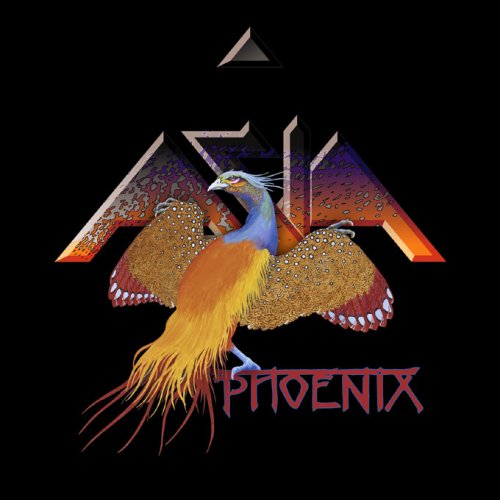
Asia - Phoenix (2008)

http://ecx.images-amazon.com/images/I/51dn6ddHmJL.jpg

No one expected this reunion. It appeared increasingly unlikely until the touring return of Asia’s original lineup in 2006 and a new studio album emerged two years later. The passage of time neutered two plus decades of acrimony and lineup changes like Geffen and the band briefly replacing bassist/vocalist John Wetton with Greg Lake, Wetton leveraging guitarist Steve Howe’s ouster from the band before the recording of Astra, his second break with the band, lawsuits, and sniping in the press. Phoenix, however, takes on none of that baggage. The songwriting on their studio reunion glows with the gratitude of survival, a bright-eyed embrace of life, and wears its enormous heart on its sleeve for all to hear.

“Never Again” is a fantastic opener with steady verses, glittering bridges, and a surging chorus that hits a memorably rousing note. The opening guitar lines are vaguely reminiscent of the iconic riffing beginning “Heat of the Moment” and Steve Howe drops some tasty fills into the arrangement at well-timed points. The band opted to handle the album’s production chores in house with Steve Rispin as co-producer and, based on this song alone, the decision is clearly astute. “Nothing’s Forever” opens with some of the band’s trademark double-tracked vocal harmonies before segueing into an understated keyboard and guitar fanfare. The proper beginning of the song comes with a muted, mid-tempo pace largely dominated by Wetton’s vocals, but the other band members provide precise and important flashes of color. Geoff Downes’ elegant piano playing on “Heroine” provides ideal accompaniment for Wetton’s equally elegant, yet impassioned, vocal. Asia remained masters of composing virtual mini-symphonies and “Heroine” is one of the best from the original lineup’s reunion.

“Sleeping Giant/No Way Back” finds Asia achieving a perfect balance between their progressive and AOR rock inclinations. The first half, an instrumental, has an unique texture thanks to the contrast between Downes’ practically staccato synth lines, Howe’s fiery lead guitar, and its vocal chorus. Howe varies his approach at scattered points with brief, exotic fills further filling the cut with vivid color. The second half of the track, “No Way Back”, is a striding nod to the band’s rockier side, mid tempo, and features a particularly passionate Wetton vocal. The two compositions share common ground while maintaining distinctly different characters. “Alibis” has a tidy, streamlined arrangement with the band’s signature vocal harmonies playing a pivotal role, but Downes and Howe certainly distinguish themselves instrumentally without ever threatening to dominate the performance. The song’s final section is quite excellent thanks to Downes utilizing different keyboard sounds and an intensely melodic solo from Howe.

“I Will Remember You” is a towering, deeply felt song. It begins life as a spartan duet between Wetton’s occasionally anguished vocal and Downes’ elegant touch on the piano. Downes revisits the piano on the album’s next song “Shadow of a Doubt”. The verses are tastefully handled before the inevitable pre-chorus build begins and it’s quite satisfying when it hits. Carl Palmer’s propulsive drumming helps give it an added urgent push and Geoff Downes’ brief synth runs sketch out small melodies and further layer the melody. The three part “Parallel Worlds/Vortex/ Déyà” is the album’s longest song, edging out the earlier “Sleeping Giant/No Way Back/Reprise” mini-suit by three seconds, but it shares none of the outright prog approach of the earlier track. Palmer’s influence on the performance, particularly the second part, has an enormously positive effect on the song. The ambition driving songwriting like this is impressive, but pulling it off with such style and substance impresses me much more. One of Steve Howe’s two songwriting credits on Phoenix, “Wish I’d Known All Along”, is rhythmically compelling and has a moodier vibe than many of Downes’ and Wetton’s contributions. Howe rips off some white hot guitar salvos, naturally, and the song’s evocative chorus is another high point.

The moodier atmosphere continues with “Orchard of Mines”, the album’s only track not written by any band members, and it’s another success. The cover’s composers, drummer Jeffrey Fayman and guitarist Dann Pursey, are members of the band Globus and their songwriting style is an ideal match for Asia. Wetton, in particular, gives the song’s lyrics a highly theatrical treatment without ever lapsing into self-indulgence. Phoenix’s penultimate song, “Over and Over”, is the album’s final Steve Howe composition. Howe utilizes his instrumental flair here with tremendous effect. His mandolin, pedal steel guitar, and regular six string overdubs are inventive and never overstated. The song has a surprisingly elegiac feel that’s perfect for its place on the album.

Phoenix has a perfect closing curtain as well. “An Extraordinary Life” embodies the gratitude and heart mentioned in this review’s introduction. The arrangement’s thoughtful construction means it never cheapens its positive outlook. Wetton’s lyric isn’t really about retaining optimism. It embodies the aforementioned characteristics, but also embodies two much wiser thoughts that the story of our lives isn’t exclusively tied to outcomes but, rather, our experiences instead. Good, bad, indifferent, everything informs and shapes who we are. The other side of that spirit in the song clearly sees we should remain forever grateful for our capacity to feel and continue getting a new chance every day to get things a little closer to right. I’m torn sometimes by the feeling the album runs a little long, but it doesn’t have a significant effect on its overall quality. It’s true no one expected this reunion, but there’s a greater truth. No one knew it would produce such outstanding results. 

Grade: A

Wednesday, February 22, 2017

Asia - Silent Nation (2004)

http://ecx.images-amazon.com/images/I/51j5v+U-fKL.jpg

Asia’s run with bassist and songwriter John Payne handling lead vocals is destined to end up a footnote in the band’s long history. The long shadow cast by the debut forever cemented John Wetton as the voice and face out front for Asia, so accepting Payne as his replacement remained a daunting task over four studio albums. Judged on their merits, Payne objectively stacks up well, but comes up short on key points. He grew into the role over time and certainly showed development however. His final studio album co-written with Geoff Downes before the 2006 reunion of the original lineup, Silent Nation, is arguably his most complete performance as the band’s front man and an inspired outing with their commercial prospects at, arguably, their lowest ebb.

There are immediate questions. “What About Love?” is the sort of arch traditionalist Asia inviting criticism. On one hand, however, there’s much worth admiring. The track’s musical elements are well balanced against each other and the band’s signature harmonies are immaculately arranged. There’s an interesting moment late in the song when the band falls away and cedes the spotlight to Geoff Downes’ organ playing. The song’s foundation, however, is moldy and rotting. The rhythm section throbs along with the same straight line tempo we’ve seemingly heard in many Asia songs. “Long Way from Home” has a little more bounce and there’s added emotional complexity here lacking in the opener. Payne’s voice is full of melancholy tempered by optimism. The tempo varies some in the middle eighth, but it doesn’t add a lot overall. The performance is tastefully done despite the band’s reputation for laying things on too thick.

Goodness always abounds when Geoff Downes plays Hammond organ. “Midnight” has a lot of instrumental goodness, but the lyric isn’t particularly substantive compared to its musical values. It’s one of the album’s extended pieces, edging far outside the purview of the typical Asia track, but it pays off musically. “Blue Moon Monday” slows things down and amps up the theatrical values, but there are a number of nicely handled transitions and the songwriting manifests a variety of moods. Songs like this and “Midnight” are Silent Nation’s clearest signals Asia are stretching a little more hoping to make more of an impact. Payne’s vocals are particularly emotive here. The title song is another example of the band showing far more taste and restraint than they are typically credited for and it’s another of the album’s extended tracks, clocking in a hair over six minutes, finding the band making a concerted effort to reconnect with a strong sense of musical virtuosity. The track “Ghost in the Mirror” is pure Asia pop 101 and such songs, typically, succeed on the strength of their chorus. Judged on that basis, this is one of the album’s more successful songs in such a vein.

“Gone Too Far” finds life as a delicate duet between Payne’s vocals and the light touch of Downes’ keyboards. It’s only half the song’s half way point when the full band enters and Guthrie Govan nails a brief, but impressive, guitar solo. The unexpected vocal chorus introduced near the song’s end seems tacked on, but others might hear it as perfectly in keeping with the song. “I Will Be There for You” is a sleek and breezy AOR rock tune with an urgent pulse and sweeping pace. Asia isn’t stretching with this track, but it plays to their obvious strengths. “Darkness Day” has strong atmospheric qualities, but there’s a feeling of straining for effect. The performance benefits from Downes’ superb sense of orchestral structure, but there’s nothing truly compelling to hold listener’s interest. Silent Nation concludes with “The Prophet”. Few songs are more illustrative of the difference between the Wetton and Payne eras of the band’s history. Hearing John Wetton lend his voice to a song like this is scarcely conceivable. It does, however, make for an impressively dramatic finale even if its ultimate effects don’t linger long. The final studio release from this period in Asia’s history has its moments, but rates as solid rather than spectacular in the end.

Grade: B

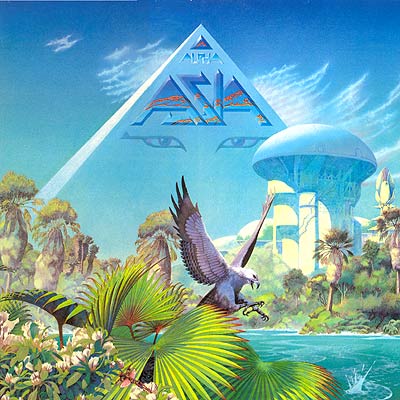
Asia - Alpha (1983)

http://www.progarchives.com/progressive_rock_discography_covers/813/cover_3713191182009.jpg

It shouldn’t have come so soon. 1984 seems like an ideal time for Asia, the much ballyhooed supergroup, to return with a well considered and focused follow up to their smash self-titled debut. The band’s songwriting trust, bassist/vocalist John Wetton and keyboardist Geoff Downes, born the brunt of the band’s commercial fortunes on their collective backs while guitarist Steve Howe parried for whatever credits he could get. This situation only became more fraught after the Wetton/Downes songwriting team scored big with “Heat of the Moment” and numerous other singles off the first album. The resulting fallout from the first album’s staggering success saw the band bowing to record company pressure and re-entering the studio before they had time to artistically recuperate. The second album, Alpha, bears all the marks of its workmanlike labor, but there are moments pointing the way to what an organically developed sophomore effort might have sounded like

It begins with two enormous power ballads. “Don’t Cry”, the album’s first single, and “The Smile Has Left Your Eyes” became instant mainstays in the band’s set thereafter and it’s easy to hear why. These are the quasi-orchestrated, cinematic pop songs tapped into the heart of Asia’s songwriting aesthetic. The Beach Boys’ influence on Wetton is often apparent throughout the band’s discography and few songs better illustrate their hold than the track “Never in a Million Years”. The expansive multi-tracked harmonies seamlessly threaded into the song highlights another superbly orchestrated arrangement, but the chorus shows cracks and doesn’t come off quite as rousing as it should.

There’s material on Alpha with potential not properly exploited. “My Own Time (I’ll Do What I Want)” contains some memorable Steve Howe guitar and his interplay with Carl Palmer is particularly strong, but the track lacks the urgency of its sentiments and comes off a little too limp. Another track from Alpha earning a longstanding place in the band’s live show is “The Heat Is On” and it’s easy to hear why. It’s the album’s best outright rocker and keeps things brisk and focused. Downes and Howe shine on their respective instruments, but the musical highlight comes with their organ/guitar exchange in the song’s second half.

The album’s second half opens with another uptempo number. Carl Palmer expertly handles “Eye to Eye” with a minimum of fuss and Downes’ keyboards have a rambunctious bite, but there’s no ultimate payoff for the track. “The Last To Know” has some virtues, but there isn’t enough to hang your attention on melodically and it ends up sounding more full of bluster than genuine dramatic value. “True Colors” has some laudable sentiments but, musically, lacks enough melody to make it top flight Asia material and the chorus sounds a bit bolted on. The band first premiered “Midnight Sun” during their initial tour, but those early performances far outstrip the comparatively leaden studio counterpart. Alpha concludes with “Open Your Eyes”, the lengthiest cut by far, and the album’s sole concession, but it’s overlong for its musical aims and plays like a very calculated, self-conscious closer.

Grade: B