Growing Old With Rock and Roll

Growing Old With Rock and Roll
Showing posts with label deep purple. Show all posts

Monday, July 23, 2018

Deep Purple - Fireball (1971)


Band as well oiled beast best describes Fireball era Deep Purple. The breakthrough success of In Rock emboldened the band, individually and collectively, with a confidence level heretofore unknown. We must remember the path to continued success is assured for them at this point – road rot hasn’t quite set in yet and maintaining momentum requires them to reproduce In Rock, frankly not a tall order for this lineup at its peak power, and nothing more. There’s swagger galore permeating this release and a practically gleeful inclination towards upending listener’s expectations.

The album opens with a bracing salvo reminiscent of In Rock’s power. Title songs are usually tucked mid way through an album’s track listing and reserved for numbers in some way representative of the band. It became a staple of the live set and returned to prominence following Blackmore’s 1993 departure from the band. Ian Paice’s drums are propulsive and swing in a way few of his contemporaries ever matched – when intelligent and well intentioned music devotees want to slather John Bonham’s memory in laurel leaves and anoint him King of Rock Drummers, they’re counseled to remember Paice’s contributions before declaring the matter settled.

“No No No” is what happens when Ritchie Blackmore listens to Shuggie Otis. We get some lyrics of the era decrying the tyranny of the Man’s hold over the outsider, but Gillan gives the song stakes it wouldn’t otherwise have with a lung-busting vocal. Paice and bassist Roger Glover ride a potent groove for Blackmore’s fiery licks to fill in. We’re back in solidly rock territory for “Demon’s Eye” and Gillan distinguishes relatively pedestrian lyrics with a vocal fully dramatizing their possibilities, Blackmore’s lead guitar is especially biting and well tailored with this cut.

“Anyone’s Daughter” dizzies casual listeners. We go from the muscular rock posturing of “Demon’s Eye” into the shaggy dog country blues of this song with nary a blink and Gillan’s vocal plays it coolly straight-faced despite the lyric’s potential for mucking things up. He shows an expert stand up comic’s instinct for playing a joke with just the right amount of deadpan and it makes this all the more enjoyable. “The Mule” is largely an Ian Paice drumming showcase, but there’s some wicked good Blackmore guitar and contributions from Jon Lord woven into the song’s fabric. Gillan’s brief vocal signals a turning point of sorts in the song, but nonetheless hits its intended mark.

“Fools” is my favorite Deep Purple song. The patient build, orchestrated in just the right way, breaks out into the sound of Purple n full swing quite unlike anything else in the band’s catalog. The album vocal isn’t even the best – the set Listen, Learn, Read On included a scat vocal, lyric not quite fleshed in, which ranks in my mind as one of the best rock vocals ever, from anyone. He brings some of that same fearlessness to this performance and it makes for one of the band’s greatest moments. Blackmore’s guitar during the song’s second half is among his finest recorded moments.

Roger Glover’s insistent bass pulse begins “No One Came”, Ian Gillan’s deliciously cynical spiel about the perils of pursuing rock and roll success and the inevitable crew of leeches glomming on. It’s another cut where Gillan’s charisma carries the day every bit as much as his lung power and Blackmore responds with a scorching old school rock and roll guitar part ratcheting up its temperature. In Rock is the template realized, Machine Head is the formula refined. Fireball, however, is the DNA of Deep Purple, laid out regardless of other considerations, and charged with once in a lifetime confidence.

Monday, March 13, 2017

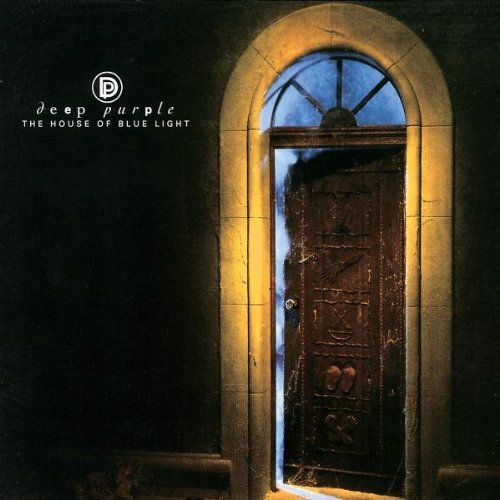
Deep Purple - The House of Blue Light (1987)

http://www.metal-archives.com/images/3/4/0/2/3402.jpg

Nineteen Eighty-Seven was a momentous year in popular music and the world had changed in the two years following Perfect Strangers. On March 9, Irish rockers U2 released The Joshua Tree, the album that solidified their position as a top tier mainstream rock act. On July 21, Guns and Roses released their seminal debut album, Appetite for Destruction. There was a kinetic, aggressive authenticity returning to rock and roll; the theatricality of “hair metal” and 80’s pop was wilting in the face of a gritty return to the first principals of rock music.

Once upon a time, Deep Purple had sounded a similar clarion call that rocked the foundations of popular music. The blistering aural assault of “Speed King” had been a direct challenge to the existing rock status quo and pushed guitar-based popular music into a hitherto unexplored area. In retrospect, it seems safe to say that the Deep Purple that returned in 1985 was not an outfit committed to pushing the boundaries of its sound and songwriting. They were content to revisit past glories on stage and record new material that was often a variation on familiar themes from their past.

Perfect Strangers played it safe and tried to deliver a solid Deep Purple album with production values relevant to the era. Constructed for maximum commercial impact, “Wasted Sunsets” aimed for the burgeoning AOR market while “Knockin’ at Your Back Door” and “Nobody’s Home” is the duo of hopeful big rock singles. Strongly influenced by the production values of Yes’ recent release, 90125, Deep Purple sounded sonically impressive, but one wishes that they would have possessed more confidence to truly be Deep Purple rather than pandering to the commercial trends of the time.

Regarding The House of the Blue Light, there were no promises we would even get a second reunion album, let alone any theories about its potential quality or lack thereof. In a 1987 interview, when confronted by an interviewer who professed surprise that the band recorded a second reunion album, Ritchie Blackmore replied, “After we had recorded the album (Perfect Strangers) many people asked us what we would do next. Everybody thought it was just a one-off thing.”

Sessions for the album commenced on April 12, 1986 in Stowe, Vermont and it took eight months before the album came out. It did not come easily; even without direct references to specific intra-band conflicts, Gillan’s remarks to the press following the album’s release reveal an unpleasant picture of a first class band following apart at the seams. When reviewing each album track for Kerrang!, Gillan dismissed the song “Dead or Alive” as being a “… a pile of shit”. In the same interview, he mentioned hating the riff for “The Unwritten Law” and mocking it behind Blackmore’s back. All was not well for the band’s lead singer. The album’s release faced delays; by September, Roger Glover was at the Union Studios in Munich, Germany, mixing the album, but additional tasks apparently arose. It has been said that Gillan added more vocal tracks and Blackmore later revealed that much of the album had been re-recorded.

Upon release, the reviews from both the mainstream press and Purple faithful alike were unenthusiastic, if not outright dismissive. Everyone expected the mainstream press to thumb their nose at Purple, as always, but despite a strong initial showing on both the US and UK charts, the buzz for the album among fans soon subsided.

The tour opened with three “public rehearsals” in Hungary beginning on January 27, 1987 that were later released in a box set entitled Hungary Days. The template established on the Perfect Strangers tour remained in place; the core Made In Japan set coupled with a selection of new songs. From this album, the band incorporated “The Unwritten Law”, “Dead or Alive”, “Hard Lovin’ Woman”, and “Bad Attitude” into the set, and “Call of the Wild” as an encore in the early shows. “Mad Dog” made exactly one memorable appearance on a later leg of the tour and disappeared. While “Bad Attitude” would disappear and reappear in the set and they would drop "Call of the Wild", the other three songs remained mainstays of the House of the Blue Light tour set list until the end.

While the live performances of these songs are much more successful than their studio counterparts, it remains inexplicable why some promising live songs were passed over in favor of what we were, essentially, clichéd material like “Hard Lovin’ Woman”. Once again, management and market forces were leading the band in the direction of catering towards a specific audience. New, unique material from the band like “Strangeways”, reputedly rehearsed, was lost on any interested concertgoers. Another song like “Mitzi Dupree” could have shared time with “Lazy” in the set list in the same position with entertaining results.

As difficult as the recording sessions had been, the tour fared no better. The band was inconsistent, the sellouts of 1985 were no more and the crowd reaction to the new material was lackluster. The cracks started showing early. On February 20, less than a month after the tour began, Ritchie played “Smoke on the Water” without the rest of the band who refused to play because of a dispute with the tour promoter. A mere seven days later, the roles reversed as the band performed encores of “Smoke on the Water” and “Call of the Wild” without Ritchie in Stockholm. The first foray into America ended abruptly in Phoenix, Arizona on May 30 when Ritchie broke his finger while smashing his guitar. The band would later return to America, but by that point, the bloom was off the rose and any momentum the band possessed had long since disappeared.

In my experience, this album divides the Deep Purple community into two distinct camps. On one side contends that the album is an abysmal failure, an overwrought piece of crap that features tired songwriting, slick 80’s production, and an uninspired band performance, among other grievous flaws. The other camp sees the album as flawed, but not without merit. They assert that the songs for an outstanding follow up are there, songs that, in some ways, are far truer to the spirit of Deep Purple than most of the preceding album.

Well, what of the songs? It is shocking that "Bad Attitude" didn't appear more often considering the live power that the song demonstrates on bootlegs of the era. It is a straight-ahead rocker, the sort that Purple excels at, and Gillan’s vocals on this song were always delivered passionately, if not perfectly, in live performance. It is a complete band performance, even on the weaker studio version. “The Unwritten Law” was a change of pace from the usual Purple fare and an Ian Paice rhythm showcase. “Call of the Wild” is a nadir in the Deep Purple catalog with its crass AOR stylistic touches, clichéd chorus, and dated synthesizer lines. “Mad Dog” is another fine example of Blackmore raiding his own back catalog for ideas, but the execution here is so straightforward, unadorned, and free from trendy production trickery that its power is infectious. The only regrettable lapse is a kitschy keyboard solo from Lord. “Black and White” starts out promising with a wailing harmonica and a brief burst of Blackmore’s guitar, but it sinks into a murky morass of more 80’s production trappings. The redeeming qualities of the song are a strong bridge and the vague hints of an interested Ritchie discernible in the rhythm playing.

“Hard Lovin’ Woman” is a pale imitation of its live counterparts, but it has its moments, especially in the instrumental passages. “The Spanish Archer” is a controversial track from the album that the hardcore Deep Purple fan either loves or disdains; there is no middle ground. It is not a song, per se, but rather an instrumental track serving as a vehicle for Blackmore’s solos. The track is one of the most nakedly emotional tracks of the band’s career and among the finest lyrics Gillan ever wrote for the band. The anguish in Gillan’s vocals charges this lyric about the end of a relationship with real emotional gravity; from the time I first heard this song as a teenager, I’ve always believed that this is one of Purple’s most interesting moments on record. While it certainly is not their best moment, it is a fascinating window into the heart of Ian Gillan as what had begun so spectacularly was now blowing apart in his face.

The vocal harmonies that open “Strangeways” are the first sign that there is some change here. It is a major achievement from the band considering the tenor of their relationship with each other. There is a greater cohesion to this song than many of its counterparts. Each part seems to complement each other rather than sounding like a hodgepodge of musical ideas tacked together and passed off as an organic work of real inspiration. The exotic, slightly alien atmosphere that the band conjures during the instrumental passages is a modern twist to the long established Purple formula.

“Mitzi Dupree” is a spectacular moment on the album that has held a place in my heart over these last 22 years. From the scorching licks that Blackmore offers at the onset, Lord’s wonderful piano, and Gillan’s full on, emotive vocal, it is a brilliant blues pastiche that was thrown together and ended up a happy accident. Some might say that the song is slight and they would be right, but it has humor and is raw and alive.

“Dead or Alive” closes the album with another in an endless array of anti-drug songs that hard rock and heavy metal acts offered during the 1980’s. Even by 1987, the message contained in its lyrics was rote and passé. The song is good, innocuous fun and an up-tempo closer to the album. Purple aren’t giving you anything here that you haven’t heard before, but they deliver it with great gusto; let me caution that statement by saying that if you really want to hear this song, download shows from this era today. However, the studio version does feature a stirring guitar/organ duel that redeems the regrettable inclusion of synthesizers earlier in the song.

Twenty-three years removed from its release, The House of Blue Light has suffered undeserved slights. While the songwriting process certainly suffered from the intra-band tension, the band could still produce flashes of its proud spirit, or provide a reasonable facsimile. These factors, among others, make the album a fractured work. It is, in equal parts, contrived product, an extension of the “safe” approach that the band adopted for Perfect Strangers, a tentative attempt at staking out new approaches for the coming decade, a fond recapitulation of past themes and glories, and overproduced gunk reworked to the tenth degree. Over two decades removed from its release, it remains an essential album for those hungry for a complete picture of this band, good and bad, and who value the legitimate efforts the band has made throughout its career at diversifying its songwriting.

Grade: B

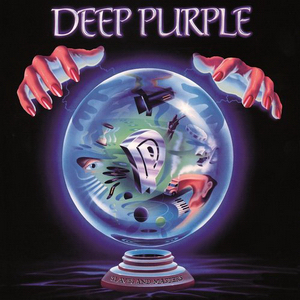
Deep Purple - Slaves and Masters (1992): A Commentary

https://upload.wikimedia.org/wikipedia/en/6/68/Slaves_and_Masters.jpg

Slaves and Masters works, but sputters. There is a breathing creativity in songs like "King of Dreams", "Truth Hurts", and "Breakfast in Bed" that builds logically on Blackmore's interest in a more melodic form of hard rock. The vague European sensibilities merge with a pop slant that creates a new dynamic for Purple, but faceless rock deflects these stabs in a new direction and calculated, saccharine ballads betray the Purple sound. "Too Much Is Not Enough" and "Love Conquers All" have so little to do with Deep Purple's original impulse that their inclusion on the album jars out joint what is otherwise a honest step forward into the future.

The fans revolt. Replacing Ian Gillan with Joe Lynn Turner brings the band a younger, more consistent singer and perhaps a more compliant creative partner, but the sacrificing Gillan's swagger and effortless command over the band's classics is a heavy blow. Turner buries the vocals under a thick layer of screeches and squeals that presumably constitutes innovative rock music for an early 1990's audience. Deep Purple is trying to thread a needle. Somehow, the band thinks they can embrace the modern AOR sound, following Aerosmith's example, while retaining signature and idiosyncratic strains of the Deep Purple sound. They cannot.

It works best on stage. Perhaps realizing Turner's limitations on the classic material, the band's live performance steers towards the new material more than any other time in the band's recent history. Conscious of the fact that the faithful Deep Purple audience will resist another singer performing the classic material, the band tries to put its new lineup and direction in the spotlight by focusing the set on the album's stronger songs. Turner excels. In every flourish, every line, you hear Turner just singing and not interpreting songs he is clearly intimidated by.

Unlike other Purple tours, the set list changes during the course of the tour. The band tries "Wicked Ways" on the opening dates, but it doesn't last long. "King of Dreams" is part of the set until the band hits America where they drop the closest thing to a hit song that Slaves and Masters offers; it resurfaces during the tour's final stages. "Space Truckin'" is missing from the set list until the last night of the tour. The band rehearses "Fireball" and the insipid "Too Much Is Not Enough" for the tour. Turner wants Blackmore to add "Pictures of Home" to the set, but Blackmore refuses. The band plays a variety of medleys and covers throughout the tour. They tackle Procol Harum's "A Whiter Shade of Pale", The Beatles' "Yesterday", and Jimi Hendrix's "Hey Joe", among others.

The tour kicks off on February 4th, 1991 in Ostrava, Czechoslovakia. It is the story of two performances. On one hand, the band is a well-rehearsed, professional machine that plays with expert power. Blackmore is reborn. His playing is erratic during the House of the Blue Light tour; the growing tension with Ian Gillan pushes him into limp rhythm guitar work, messy and atonal solos, and refusing to play encores. He is rampaging once Paice bites into his drumming with impressive precision and red-hot aggression. Jon Lord answers every volley from Blackmore's guitar with thick sheets of organ and keyboard playing. The band is comfortable and confident.

Joe Lynn Turner is not. A film crew is present and Turner struts, preens, slaps his backside like a stripper and Ritchie later claims that, in off-stage moments, Turner is doing pushups. Ritchie openly laughs at him onstage. He cannot relax. Instead of easing through the songs and relying on his natural talent, Turner suffocates the classics with over-emphasis, useless screeches and screams, and unwieldy phrasing. His performance of "Child in Time", thankfully short, is much poorer fare. His first public performance of the MKIII classic "Burn" is promising, but he forgets some important lyrics. This remains a problem throughout the tour on this and on other songs. He wants to play the rock star and what the MKII songs require isn't a self-conscious rock star but someone with the amiable self-confidence to trust the songs and not dress them up with cheesy stage mannerisms. On the newer material, Turner is confident and singing well, particularly a hot version of "Wicked Ways".

The tour rolls through the customary European stops. Berlin, Paris, Gothenburg, Zurich, and Rotterdam, among others. The low point comes in Stockholm when a sick Turner, a sloppy Ritchie, and technical problems conspire to produce one of the tour's worst outings. The terrible performance baffles and, ultimately, enrages the audience. Many leave disgruntled and visibly upset. The disaster upsets Ritchie and he considers quitting on the spot. Only a marathon effort by manager Bruce Payne salvages the tour. The country's largest selling newspaper runs a headline that reads "Deep Purple Sink Ever Deeper".

The band recovers. Gothenburg is the next night and the show is exciting. The Purple faithful are as receptive as ever to the core MKII lineup, but the new singer tackling the classic material is not winning over any new converts. The band plays their first UK show in Manchester on March 10th. The story is the same with Turner and the MKII material, but the band plays with explosive inspiration. The new material shines. Turner and the band alike give an extended, brilliant performance of "Truth Hurts". Blackmore leads the band through whiplash versions of "The Cut Runs Deep", a powerful version of "Perfect Strangers" that Turner sings well, and one of the better performances of "Burn" from this tour. The audience is willing to listen and the band makes them sit up and take notice, but a vocal segment of the crowd makes their displeasure known. Turner tells someone in the audience to fuck off.

The UK leg of the tour is brief and brilliant. The band starts playing and, most importantly, singing as if they have something to prove. It ends with a strong performance in Birmingham and a series of shows at London's Hammersmith Odeon. Despite the shaky opening to the tour, the band does strong business during their European trek. Turner is even singing some MKII material with something approaching the confidence of his predecessor; look no further than recordings of "Perfect Strangers" from March 11th and 12th in Edinburgh and Birmingham, respectively.

The band plays their first show in the United States on April 10th in Burlington, Vermont. The unlikely venue for a major tour suggests that the band wants to start small before hitting the larger halls and theaters. Because that is what it is now. It does not matter that Ritchie Blackmore is reborn and that the band, as an unit, is playing better than they have since 1972. A lackluster 1988 North American tour in support of the equally lackluster live album Nobody's Perfect hurts the band's standing. Perhaps the big money reunion tour is an aberration, a profitable nostalgia march across a country that long ago embraces the band, but now sneers at them as dinosaurs of a bygone era. Perhaps it is the meteoric rise of modern American bands like Guns and Roses, the resurrection of American peers like Aerosmith, which helps to disable the band's creative powers. The band scores a minor hit in America with "King of Dreams", but it means nothing. There is a new sound in the air and Deep Purple cannot capture it. The world changes and Deep Purple does not. At least not enough for America.

Poor attendance forces the band to cancel shows. Turner later cites the Gulf War and a chaotic American economy as other factors for the small attendance. The tour lasts 22 days before the band gives up and brings the tour to a halt for two months. The tour resumes on June 24th in Tokyo. The band plays four Japanese dates before playing one concert each in Thailand and Singapore. No audience recordings for the latter shows are in circulation. The band takes a month and a half off before playing again. They reconvene for a series of shows in South America that are profitable and musically exceptional, but sound problems mar some shows and, once again, the band's visit is brief. There is no apparent design to any of this. The band is not launching new legs to the tour, but rather glorified residencies. The band is not promoting this album; they are fulfilling contractual obligations and satisfying an innate to perform. The album is just another record now tension swallows the band.

The final portion of the tour sees the band return to Eastern Europe for one date in Poznan, Poland. Tapers record and film this September 23rd concert and the decision is a wise one for history; the concert is one of the best performances on the tour. The band later plays two dates in Hungary. The band is playing with the same fire they bring to their earlier jaunts through the United Kingdom and the United States. The band sounds musically robust, but the band's personal relationships split into warring factions. They are talking about a new album, but debate rages about the creative direction the band takes from here. Turner and Blackmore advocate pursing the direction of Slaves and Masters even further, while other band members, to a greater or lesser extent, want the band to continue mining its decades-old formula for success. The lineup is taking its time to fall apart, but it is falling apart.

The band plays a one-off show in Athens, Greece before playing the last two dates of the tour on September 28th and 29th, 1991 in Tel Aviv, Israel. Israeli radio records and broadcasts the September 28th show. Despite being the final recording of the tour, the first Tel Aviv show is a microcosm of all that is right and wrong alike about this tour. The entire band continues to give stellar performances of the new songs. They continue to claw and scratch for a shred of the identifiable Purple sound on the older material and the lead singer continues to confuse preening like a peacock for fronting a top shelf rock and roll band. In 2008, Deep Purple returns for the first time to the country after a seventeen-year absence. The Israeli Haaretz Daily Newspaper runs an article on August 14th, 2008 that mentions these concerts. A soundman who works the shows recalls how Turner would go backstage between songs to a girlfriend waiting with a hot hair dryer to refresh and restyle his hair. On the second night, Blackmore storms off and halts the show. It marks the last time this lineup will perform together.

However, the controversy lives on. Is this lineup Deep Rainbow and does it betray the band's legacy? Should we consider Slaves and Masters as the low point in Deep Purple's recording career? There is no simple answer. The live performances of new material are improvements on their studio counterparts, but the material is strong to begin with. Deep Purple is taking clear aim at a modern sound and songwriting aesthetic. Furthermore, a number of the songs embrace the traditional Deep Purple sound. "The Cut Runs Deep", "Truth Hurts", "Fire in the Basement" and, in spirit, "Fortuneteller" are songs worthy of the Deep Purple name. The album is no betrayal.

It is a failure, but a noble failure. Admire a band that, late in their recording careers, makes a gamble for mainstream success that requires a seismic shift in the band's artistic aims. Admire a band that, realizing their decisions are alienating a significant segment of their fan base, nonetheless dive headlong into a world tour determined to win those fans over through sheer virtuosity alone. They are worthy of your admiration and their failure is worthy of respect. They are fantastic musicians and this album and tour are worthy additions to the band's long history.

Friday, March 10, 2017

Deep Purple - Perfect Strangers (1985)


http://k35.kn3.net/F8504FCB4.jpg

When I now think about my grandma’s living room carpet, it reminds me of a seabed floor. Years of footsteps rendered the green, purple, and white carpet strands inert and I spent much of my time watching her large tube-powered color television with my elbows driven into the floor watching the screen. I lived underwater during those years. I watched television muffling the adult world of my mother quarreling with my grandma, my dad biting his tongue, and a thousand footsteps kneading the carpet down around me. I listened and watched MTV intently. This music television predated The Real World, Remote Control, Yo! MTV Raps, and a score of other semi-coherent nonsense the network later pandered as cutting edge. I remember the live concerts. I remember the network's Closet Classics. I remember watching their broadcast of Live Aid raptly waiting for Black Sabbath’s reunion. I remember more clearly, however, the video for Deep Purple’s “Perfect Strangers”. It changed my life.

You can, in retrospect, see it coming. Purple’s 1984 reunion heralded the opening of the “reunion era” when marquee acts from the previous decade reconvened in hopes of striking commercial gold. Few, if any, experienced the same success until Aerosmith successfully reinvented themselves on the backs of their appearance with rap trio Run-DMC. No one then or now will ever confused  1985’s Perfect Strangers for the seminal releases of the band’s seventies peak. It isn’t In Rock, Fireball, or Machine Head. It isn’t, arguably, even up to the same standard as Who Do We Think We Are. Perfect Strangers is, definitely, a product of its time. There is, however, enough of the band’s halcyon magic brimming from the performances suggesting this particular configuration of musicians still stood as far from a creatively dead proposition.

We are definitely in the eighties with the introduction to the album opener “Knockin’ at Your Back Door”, but when Ian Paice’s assertive and straight-ahead drumming joins Roger Glover’s bass pulse, Purple fans are in familiar territory. The title and songwriting alike are loaded with a multitude of uniquely English sexual connotations, but vocalist Ian Gillan never fails delivering them with a deft nudge and wink that never risks cheap titillation. Guitar virtuoso Ritchie Blackmore, monumentally impressed by Yes’ 90125 release and a desire to remain relevant, adopted synth guitar with mixed results, but his playing conjures something of the youthful fire and fluency that built his reputation when he drops the pretense and simply plays. His lead work in the song’s second half deserves praise. “Under the Gun” has some romping Jon Lord organ buried a little too deeply in the mix and a predictable lyric, but there are some inventive couplets and turns of phrase and moments when Blackmore’s guitar lights the arrangement up.

“Nobody’s Home” missteps by emphasizing now regrettably dated and ornamental synth, but quickly transforms into one of the album’s purest invocations of past glories in a modern context. The song features on of Gillan’s best vocals and singes the skin with its passion and no nonsense approach. “Mean Streak” is filler unworthy of the band and only builds any heat during its chorus and instrumental breaks. Lord’s Hammond organ kicks off the album’s title song with nothing less than absolute grandeur and Gillan’s vocal turns the lyrics for “Perfect Strangers” into something much greater. The steady swing of Ian Paice’s timekeeping gives Lord and Blackmore an immense foundation to expand upon and they artfully do so. Blackmore and Lord play in lockstep during the instrumental passages of :”A Gypsy’s Kiss”, but the song is much more reflective of Blackmore’s songwriting tendencies with Rainbow and even another strong Gillan vocal fails to undercut the sense we’ve heard this before and better. 1985 stands out for a lot of reasons and the power ballad harbored increasingly commercial sway. “Wasted Sunsets” latches onto this trend while retaining enough lyric and instrumental identity to distinguish itself from the pack. This is due, in no small part, to a particularly emphatic and passionate Gillan vocal. The romping “Hungry Daze” is good fun, but it’s a little too self-referential without transforming the band’s narrative into something more universal and resonant. Instead, the song goes so far as to directly quote the band’s legendary track “Smoke on the Water” to little perceptible merit.

The album’s final song, “Not Responsible”, closes Perfect Strangers with a surprisingly hard-nosed gem full of confident swagger. The lyrics establish a voice distinctly different from anything else on the album and Gillan lives with every line. His ability to bring palpable physical presence and immense intelligence to bear on the lyric leads the way, but the band responds with an equally rugged and crisp performance. Perfect Strangers isn’t the wild-eyed artistic success Purple devotees love to say it is, but it still holds up as one of the decade’s best reunion efforts and rates respectably in the band’s discography.

Grade: B+